
This is default featured slide 1 title

Go to Blogger edit html and find these sentences.Now replace these sentences with your own descriptions.

This is default featured slide 2 title

Go to Blogger edit html and find these sentences.Now replace these sentences with your own descriptions.

This is default featured slide 3 title

Go to Blogger edit html and find these sentences.Now replace these sentences with your own descriptions.

This is default featured slide 4 title

Go to Blogger edit html and find these sentences.Now replace these sentences with your own descriptions.

This is default featured slide 5 title

Go to Blogger edit html and find these sentences.Now replace these sentences with your own descriptions.

Saturday, February 07, 2015

A father who bought a 'bargain' XBox One on eBay was shocked to receive a grainy printed photo of one instead.


Peter Clatworthy, 19, has the same shock after he spent a year saving up to buy a limited edition XBox One for his son McKenzie's fourth Christmas.

The student from Bilborough, Nottinghamshire, was duped in December 2013 by an advert which said 'XBox One Fifa Day One Edition, Photo Brand New UK 2012' - referring only to a sheet of A4 paper.

He paid £450 and the auction site seller even wrote 'thank you for your purchase' on the back.

But Peter Clatworthy insisted that unlike in other cases, the auction site listing contained no small print that indicated he may only be buying a picture.


eBay insisted similar frauds were rare - but Peter Clatworthy was not the first victim to receive a piece of paper.

A surfer sold his last board to buy a top-of-the-range laptop on eBay - but was sent a black-and-white photo of one instead.


Paul Barrington, 38, thought he had bagged a bargain when he bought the £1,500 Apple MacBook for £300 to set up a wedding DJ business.

But all that arrived at his seaside home in Ilfracombe, Devon, a few days later was a 'light as a feather' cardboard box with the printout inside.


Mr Barrington was forced to give up surfing - his passion since the age of ten - and his job in childcare after developing the lung condition bullous emphysema, which causes shortness of breath.

He hoped to forge a new business as a DJ at wedding receptions, using the computer to arrange his playlists and run his accounts during regular trips to hospital.


With the money from his last surfboard, he ordered the MacBook from eBay - but all he received was a small square box.

'I sold my pride and joy for a piece of paper,' he said.

'It's the first time I haven't had a surfboard since I was ten years old, but I need a laptop so I checked the listing and the seller's rating.


Pale imitation: The black-and-white photo on an A4 sheet of paper which Mr Barrington bought for £300

'He'd been a member for a few years, so there was nothing to be suspicious about.

'I was excited about winning the auction and just thought, "I've got a laptop so I can start the business".

'The package was as light as a feather. Why bother sending a picture in a box? It doesn't make any sense. I almost had to laugh.

'The worst thing is, I'm trying to set up a business and this is a massive delay.'


An eBay spokesman said: 'I can confirm that this type of incident is very rare and is also covered by eBay Money Back Guarantee.

'We were very sorry to hear about Mr Barrington’s unusual experience. We’ll make sure he gets a refund as soon as possible and investigate the circumstances around this sale.'

A spokesman added: 'eBay takes the issue of fraud very seriously, with more than 149 million active global users engaged in transactions across 50,000 unique categories.

'At any given moment, over 800 million listings are offered for sale on eBay globally – with the overwhelming majority of listings on eBay coming from honest and law-abiding sellers.'

source: http://www.telegraph.co.uk/


A Dongle that plugs into a smartphone or computer can diagnose HIV and syphilis within 15 minutes

Scientists at Columbia University have invented a new dongle that attaches to a mobile phone and can diagnose HIV and syphilis in 15 minutes. This means millions of lives could be saved through early diagnosis.


The kit, which attaches to any smartphone or computer, replicates a lab test and can give a diagnosis in the field in just 15 minutes.

The device is nearly 540 times cheaper than current lab testing machines, and has already been tested on patients in Rwanda during a pilot study.


Health workers tested the blood of 96 patients who were enrolling into clinics aimed at preventing transmission of HIV from mother to child, or those visiting voluntary counselling and testing centres.


The dongle was developed to be small and light enough to fit in one hand.


It draws its power from the smartphone allowing it to be used in remote areas, providing the phone is charged.

Samuel Sia, associate professor of biomedical engineering at Columbia University, said the team's work showed that full laboratory-quality tests can be run on a smartphone app.

This makes a diagnosis accessible to almost any population with access to smartphones.

source: http://www.dailymail.co.uk


Funds flow in for GnuPG author after article reveals his plight


On Thursday ProPublica published the frustrating tale of Werner Koch, the one guy – yes really – who’s maintaining the extremely widely-used Gnu Privacy Guard (GnuPG or GPG) software that people use to encrypt their email messages and digitally authenticate downloadable programs such as the Tor Browser.

As the article revealed, Germany-based Koch was raising around $25,000 a year for his work, not enough for someone supporting a wife and kid. A crowdfunding campaign he began in December had only pulled in $43,000 – way less than he needed to employ a second full-time developer for the project. Well, the article worked.


At the time of writing on Friday, that campaign had pulled in over €160,000 ($183,000) from supporters. And that’s not all: Facebook and Stripe will each send $50,000 Koch’s way every year to sustain the project, and the Linux Foundation has also granted him $60,000 (a decision that actually preceded the ProPublica piece.)


The campaign gave Koch, who has an 8-year-old daughter and a wife who isn't working, some breathing room. But when I asked him what he will do when the current batch of money runs out, he shrugged and said he prefers not to think about it. "I'm very glad that there is money for the next three months," Koch said. "Really I am better at programming than this business stuff."

Good work, everyone. Koch’s software is very important, and the fact he’s been maintaining it for so long, for so little reward, is an amazing achievement. Now, with a second developer, he can make it even better. Now let’s see the same support for more privacy-protecting tools:

source: http://www.propublica.org/article/the-worlds-email-encryption-software-relies-on-one-guy-who-is-going-broke


Friday, February 06, 2015

‘Robot scientist’ Eve could speed up search for new drugs

British scientists have developed Eve, an artificially intelligent “robot scientist” that could make drug discovery faster and cheaper.

Based at the University of Manchester, Eve has already discovered that a compound shown to have anti-cancer properties might also be used in the fight against malaria.

Eve was developed by researchers at the Universities of Aberystwyth and Cambridge. In 2009, they announced Adam, the first machine to independently discover new scientific knowledge, according to the researchers.


How Eve automates early-stage drug design


Eve is designed to automate early-stage drug design. In a study published today (February 4) in the Royal Society journal Interface, the researchers describe how the Eve robot can help identify promising new drug candidates for malaria and neglected tropical diseases such as African sleeping sickness and Chagas’ disease.

“Eve exploits its artificial intelligence to learn from early successes in her screens and select compounds that have a high probability of being active against the chosen drug target,” says professor Steve Oliver from the Cambridge Systems Biology Centre and the Department of Biochemistry at the University of Cambridge.


Eve uses a smart screening system, based on genetically engineered yeast, he explains. “This allows Eve to exclude compounds that are toxic to cells and select those that block the action of the parasite protein while leaving any equivalent human protein unscathed. This reduces the costs, uncertainty, and time involved in drug screening, and has the potential to improve the lives of millions of people worldwide.”

First, Eve systematically tests each member from a large set of compounds in the standard brute-force way of conventional mass screening. The compounds are screened against assays (tests) designed to be automatically engineered, and can be generated much faster and more cheaply than the special-purpose assays that are currently standard. This enables more types of assay to be applied, more efficient use of screening facilities to be made, and thereby increases the probability of a discovery within a given budget.

Eve’s robotic system is capable of screening more than 10,000 compounds per day. However, while simple to automate, mass screening is still relatively slow and wasteful of resources as every compound in the library is tested. It is also unintelligent, as it makes no use of what is learned during screening.


To improve this process, Eve selects at random a subset of the library to find compounds that pass the first assay; any “hits” are re-tested multiple times to reduce the probability of false positives. Taking this set of confirmed hits, Eve uses statistics and machine learning to predict new structures that might score better against the assays. Although she currently does not have the ability to synthesize such compounds, future versions of the robot could potentially incorporate this feature.

Robot scientists are a natural extension of the trend of increased involvement of automation in science. They can automatically develop and test hypotheses to explain observations, run experiments using laboratory robotics, interpret the results to amend their hypotheses, and then repeat the cycle, automating high-throughput hypothesis-led research. Robot scientists are also well suited to recording scientific knowledge: as the experiments are conceived and executed automatically by computer, it is possible to completely capture and digitally curate all aspects of the scientific process.

First challenge: develop a drug for tropical parasites

To test the viability of the approach, the researchers developed assays targeting key molecules from parasites responsible for diseases such as malaria, Chagas’ disease and schistosomiasis and tested against these a library of approximately 1,500 clinically approved compounds.

Through this, Eve showed that a compound that has previously been investigated as an anti-cancer drug inhibits a key molecule known as DHFR in the malaria parasite. Drugs that inhibit this molecule are currently routinely used to protect against malaria, and are given to over a million children; however, the emergence of strains of parasites resistant to existing drugs means that the search for new drugs is becoming increasingly more urgent.

“Despite extensive efforts, no one has been able to find a new antimalarial that targets DHFR and is able to pass clinical trials,” says professor Ross King, who heads the “Robot Scientist” center at the University of Manchester. “Eve’s discovery could be even more significant than just demonstrating a new approach to drug discovery.”

“Neglected tropical diseases are a scourge of humanity, infecting hundreds of millions of people, and killing millions of people every year,” says Oliver. “We know what causes these diseases and that we can, in theory, attack the parasites that cause them using small molecule drugs. But the cost and speed of drug discovery and the economic return make them unattractive to the pharmaceutical industry.

The research was supported by the Biotechnology & Biological Sciences Research Council and the European Commission.


3 Android adware Apps 'infects millions' of phones and tablets

Researchers from Security firm Avast has pointed out three popular gaming apps on Google Play store that actually infect users’ device with "adware" when installed. What’s interesting about this Android adware is that some of the apps have already been downloaded over a Million times.

The three apps found free in the Play Store include "Durak" card game app, "IQ Test" app and "Russian History" app. The apps are from different developers, but each has the same malicious software installed.

Durak card game app alone has 5 to 10 million installs, and the combination of all the three apps have more than 15 Million installs, according to the data on Google Play Store.


Once installed on users smartphone, the malicious apps display advertisements disguised as warning messages to end users when they unlock their Android smartphones, according to a blog post published Tuesday by antivirus provider Avast.


"When you install Durak, it seems to be a completely normal and well working gaming app," says Avast researcher Filip Chytry. "This was the same for the other apps, which included an IQ test and a history app. This impression remains until you reboot your device and wait for a couple of days. After a week, you might start to feel there is something wrong with your device."


After almost 30 days before starting to spam out adverts, users will suddenly start seeing ads appear every time they unlock their device. These ads will warn them that their device is infected or full of porn or needs an update, which is, no doubt, a complete gag.
But, if you approve, you'll be redirected to malicious pages that could cause even more harm and potentially result in you being signed up for a premium SMS service that you have no interest in, and even in installing apps that simply collect your personal data for comfort while offering you no additional value.

WHAT IS ADWARE ?

For those not familiar with adware, adware is a software that automatically displays or downloads advertising material like banners or pop-ups when a user is online. Doesn’t sound dangerous, Right? But adware could result in a serious threat to users.
Android Adware can pose a major threat to users' privacy, since some ad networks gather personal information like phone number, email address, and many more. Depending on where the ad network is based, there might be no legal guidelines for how that information could be used.


Inflated numbers
Although Google Play's own site indicated the software had been downloaded many millions of times, one security researcher was cautious about the figures.
"I would take the numbers with a pinch of salt because one thing that malware authors might do is deliberately up the amount of downloads in order to make an app appear more popular than it really is," said Dr Steven Murdoch from University College London's information security research group.
"Google does scan for malware that it knows about and it also has some more advanced techniques to detect malicious behaviour.
"But these don't work 100% of the time and some apps do slip through the checks - and there is a continual cat and mouse game of people looking for malware and the authors trying to bypass the checks."


Tuesday, February 03, 2015

Announcing The Inaugural FbStart Apps of the Year Awards Program grand prize of $50,000

After launching FbStart last year, we've accepted thousands of mobile apps into the program and helped these developers grow their startups by offering crucial tools like ad credits, analytics, email marketing, device testing and credit card processing. Today, we are announcing FbStart Apps of the Year, our inaugural awards program to recognize the most successful apps among our members.

We will reach out directly to members with instructions on how to nominate their apps for the awards, and we will announce the winners at F8 in March. We will be awarding a grand prize of $50,000 and $25,000 in Facebook Ad Credit to the FbStart App of the Year. The awards will be judged by a panel of experts in mobile development who come from Facebook and the startup community.


After receiving instructions, startups in the program can nominate their apps for the awards untilMarch 9th, 12:00 AM Pacific Standard Time. Apps must be integrated with Facebook Platform or use Parse to be eligible. Startups not yet in FbStart can apply to be a member by March 7th in order to be considered for the awards. Before submitting, please read our Official Rules.


We'll be considering apps based on the following principles:
  • Growth and engagement: Is the app growing quickly? Has the app entered new markets, or done a good job retaining new users? Does the app demonstrate potential for growth?
  • Experience and design: Is the design optimized for the best user experience? Does it have a streamlined look and feel?
  • Efficiency at scale: How does the app use Facebook or other third-party tools to make app development and iteration efficient?
  • Leveraging Facebook Platform: Are Facebook and/or Parse products an integral part of the app? Do they improve any of the above three areas?
We plan to give out awards to five startups this year, each with their own accompanying prizes:
  • FbStart App of the Year (One winner): Overall winner based on the criteria above. $50,000 cash prize, $25,000 in Facebook Ad Credit, and a 1:1 mentorship session with one of the judges from our panel.
  • Regional Apps of the Year (Three winners): The best apps from the four global regions (APAC, EMEA, Latin America and North America), excluding the App of the Year's region. $5,000 cash prize, and $5,000 in Facebook Ad Credit each.
  • Social Good App of the Year (One winner): An app that seeks to solve community needs or promote social issues. $5,000 cash prize, and $5,000 in Facebook Ad Credit.
We look forward to receiving FbStart member submissions and reviewing before F8.


 emailed by : Kevin Prior


Monday, February 02, 2015

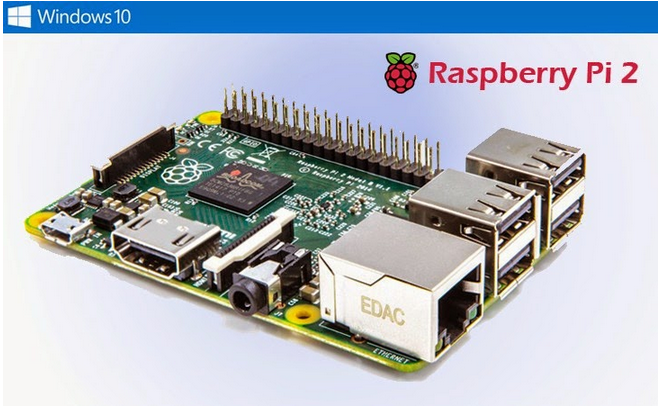
Raspberry Pi 2 runs Windows 10 which costs $35 only

Raspberry Pi 2 have six times the processing power of Model B+. Also, its quad-core chip and twice the amount of main memory will support more intensive processing tasks, which means the device can do almost everything a normal PC can, such as Word processing, Web surfing, among other tasks.
The Raspberry Pi is an extremely simple computer that looks and feels very basic, but could be built into a number of geeky projects. Because of low-cost appeal of the Raspberry Pi, the nonprofit Raspberry Pi Foundation has sold 4.5 million units.

In its blog announcing the Raspberry Pi 2, the organization says it’s been working closely with Microsoft for the last six months to bring the forthcoming Windows 10 to the new Raspberry Pi 2.

"Because it has an ARMv7 processor, it can run the full range of ARM GNU/Linux distributions, including Snappy Ubuntu Core, as well as Microsoft Windows 10," said Raspberry Pi creator Eben Upton.


Microsoft’s Windows 10 operating system is expected to launch this summer, and is designed to work across mobile and desktop as well. But What’s more? The new OS is being pitched at tablets, Xbox, hybrids, and the fast-emerging "Internet of Things."


The all-new and powerful version of Raspberry Pi 2 brings a host of new hardware, including a Broadcom 900GHz quad-core ARM Cortex-A7 processor and 1GB of RAM. Raspberry Pi Foundation says that these upgrades make the Pi 2 Model B a much more powerful computer which costs $35 only.

UPDATE: $25 today
https://www.raspberrypi.org/blog/#price-cut-raspberry-pi-model-b-now-only-25 

source: http://www.raspberrypi.org/raspberry-pi-2-on-sale/


Sunday, February 01, 2015

HYT Spellbinding Liquid Watches - Mechanical with Hydro System

HYT, the Swiss watchmaker that made waves in 2012 when it released the world’s first watch that uses fluids to tell time, is back with variations of its H1 and H2 models. During this year’s Baselworld watch and jewelry show, held March 27 to April 3, HYT showcased the H1 Red2 and the H2 White Gold Blue and Platinum Red. In each of these versions, the neon-green fluid found in the brand’s original watches has been replaced with either vibrant red or blue.


HYT’s unique approach to timekeeping is based upon the science of fluid mechanics. The transparent glass tube lining the perimeter of the watch’s dial is linked to two bellows powered entirely by the watch’s movement. The slow inflation of the first bellows and deflation of the second creates a pressure differential that moves two liquids—one treated with an additive that makes it glow and the other a viscous, translucent fluid—around the dial to indicate the passage of time. Once the glowing liquid reaches the 6 o’clock position, the watch’s bellows reverse and return the fluids to their initial position.


A MECHANICAL MOVEMENT
TO ACTIVATE THE HYDRO SYSTEM

Orchestrated by Brino Moutarlier, alongside Jean-François Mojon and his Chronode SA team, a mechanical movement is situated in the upper part of the watch, and propels a cam, which pushes the piston and activates the bellows.


The main challenge lay in finding an interface between the mechanical movement and the hydro system in a closed, waterproof circuit - a task further complicated by the limited space available to house them both. They had to be assembled separately to keep them independent, and then made to operate simultaneously. This is a highly delicate modular integration, which involves other constraints, such as the installation of the dial in two parts, through the sides.


The first of the colorful new models shown in Basel, the $69,000 H1 Red2, is a variation of HYT’s original H1 design and features a pink-gold-and-titanium case and red timekeeping fluid. The H2 collection—which displays touches inspired by automotive design, including bellows arranged in a V configuration like the cylinders of an engine and a crown position indicator that recalls the shifter of a manual transmission—has two new additions: the $160,000 White Gold Blue, which, as its name in implies, features blue liquid, and the $190,000 Platinum Red, equipped with red liquid. The HYT H1 Red2 will be limited to 50 examples, and the H2 White Gold Blue and Platinum Red will be limited
to just 20 and 15 pieces, respectively.

 The New HYT Skull Green Eye model Limited edition of 50 pieces


 (www.hytwatches.com)